












The Maasai have come to represent Africa at its most primal, a fiercely
independent tribe of legendary courage who sternly shun the modern
world in favour of traditional rites and customs.
The Maasai are undoubtedly one of the most famous traditional cultures on earth.
In recent
years, the distinctive Maasai beading and decorative jewellrey have
become a fashion item in the West, and remain one of the most popular
items taken home by visitors to Kenya. So popular has Maasai beading
become that many modern functional items, including watchstraps, belts,
handbags and even mobile phone covers are being produced in Maasai
designs.
The Maasai are indeed a truly independent and
proud with a culture more complex and interesting than popular
imagination would suggest. They once ranged widely across much of
Southern and Central Kenya, extending north to Laikipia, and South
across the border into Tanzania. Today most of the Maasai population
lives throughout the South West of the country.
The Maasai have ancestral ties to the Samburu and the Njemps with whom they share a language Maa, from which the name Maasai comes. The
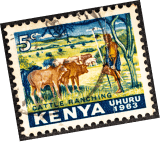
Maasai are completely nomadic cattle herders, and it is only very
recently that any move towards agriculture has become evident.
Cattle
are very important to the Maasai, and are the subject of mystical
beliefs and reverence. Maasai mythology tells of a time when the earth
and sky were joined together, until they were suddenly torn apart, with
only the wild fig trees left as bridges between the two. As a gift to
the Maasai, God - called Enkai sent herds of cattle down through these trees to earth.
To
the Maasai cattle are sacred and a direct gift from the heavens. Grass
is also considered a blessing and sacred. When passing a fig tree, it
is customary for the Maasai to push handfuls of grass between the
roots, as homage to the source of their herds. One of the more common
Maasai greetings is "I hope your cattle are well".
Wildlife is
also considered sacred, especially the herds of wildebeest that
regenerate the precious grasslands. Lions are considered a threat to
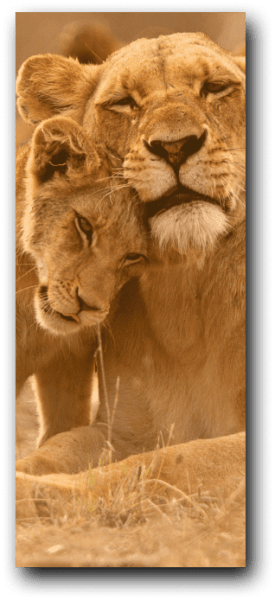
cattle, which are enclosed in protective bomas of thorn at night. While Lions were traditionally respected, cattle raiding individuals were also hunted. Lion hunts (Olomayio) have always been an integral part of Maasai life. These were large ceremonial events which represented a chance for young Morani
(warriors) to prove their courage. Lion hunting parties were
traditionally made up of a group of moran, armed with spears and
buffalo hide shields.
Bells stuffed with grass were worn on the legs of
each moran. The moran would stalk silently up to a lion resting in
thick cover, then remove the grass and begin a noisome charge into the
bush. The Lion would inevitably charge and face the hunters.
Victory
in a lion hunt was always great cause for celebration, and the
returning hunters would perform a spectacular dance called the Engilakinoto.
This dance is based a deep rhythmic chant accompanied by a exaggerated
thrust of the chest. As the dance progresses, moran display their
strength with a series of powerful vertical leaps. This dance is a
remarkable sight, with gifted moran having been known to leap up to
four feet clear of the earth. Similar dances such as the Eoko ( a dance to bless cattle) and the Eoko oo'njorin(a war dance) are cause for the same exuberant displays of strength.
There
is a definite prominence given to the skills of warriorhood in Maasai
culture, explaining their expansion and dominance of a wide range of
lands throughout Kenya. They have a highly developed system of
initiation, and age-sets. The first initiation for boys and their age
mates comes with circumcision, a time of great celebration. This is
followed by a period of convalescence, during which the boys wear black
and decorate their faces with white powder.
The young men are
then considered Junior moran. Moran distend their earlobes (as do
women) and grow their hair into long braids, usually decorated with red
ochre, which is also used to slather their upper bodies. Red is
considered a sacred colour, and is always the basic color of the Maasai
shukka or blanket worn around the shoulders by both men and women.
The beading worn by the Maasai is also highly symbolic. There
are around 40 varieties of beadwork, traditionally made by women to be
worn by both women and men. As a rule, the two most common colours used
are red, blue and green.Red is the colour of the Maasai, Blue beads are
regarded as Godly, directly reflecting the colour of the sky, while
green is the colour of God’s greatest blessing, fresh grass after
rainfall.
One of the most popular necklaces worn by Maasai
women is a large flat disc that surrounds the neck, which are made up
of rows of beads threaded onto wire, secured and spaced with cow hide
strips.
Unmarried girls wear these necklaces when dancing,
using the movement of the disc to emphasize their lithe movements. One
of the most common dances for women is the Olamal,
which women perform to attract blessings from community leaders.
Before marriage, a girl may decorate only the upper ear, and not the
lobes. The upper ear is pierced with a large hole, and beading fastened
to the ear. As a girl grows older, her ears are increasingly decorated
. At adulthood, her lobes are pierced, and gradually distend with the
weight of the beads.
On her wedding day, an extremely elaborate,
knee length necklace is worn throughout the ceremony. A wedding is
cause for a girl to display all of her finery, and so many beaded
necklaces and ornaments are worn that it can be difficult for the bride
to walk.
Married women wear the Nborro - long blue bead
necklaces, and also decorate their earlobes with long beaded flaps. A
married woman will also often carry a snuff container threaded onto her
necklaces.
When a mother sends her son to be initiated, she presents him with pendants known as surutia
to wear throughout his initiation. He will later return these to her,
to be worn proudly as a sign of her son’s status. A mother will wear
these surutia all of her life, and they are only removed in the event of a sons' death.
Initiated Moran will mostly wander freely through Maasailand, visiting various communities along the way.
They
return for the Eunoto ceremony when their heads are ceremonially shaved
by their mother. This marks their passage to Senior Moran, at which
time they are considered to have reached marriageable age.
After
marriage, the passage is made to Junior Elder, and then age dictates
the passage to Senior elder. The wisdom of elders is highly regarded,
and elders will always carry a large stick or rungu to symbolize their
position in the community.
The most revered of all elders were the laibons - traditional prophets, healers and seers. The role of the laibon was of paramount importance in traditional Maasai society.
Throughout
Maasai life almost every rite of passage, from birth up to (though not
including) death are greeted with celebrations and ceremony. These
ceremonies are always elaborate and there are many recurring customs.
Milk is also considered sacred, and either milk itself, or
representative white dust, are used to bestow blessings.
Many
ceremonies involve the ritual slaughter of cattle or goats, with meat
being distributed among the community according to social rank. At
other times, live cattle are bled by opening a vein on the neck or
flank with the point of an arrow. The blood is collected in a gourd,
and the wound closed with ashes. The blood is either drunk immediately
while fresh or mixed with milk. Even at slaughter, blood is collected
and mixed with milk to be drunk later. Sour milk is also considered a
delicacy.
Maasai villages, or Manyattas are usually a circular encampment of long, low, rounded houses, created by daubing cattle dung over a framework of sticks.
Visiting
a manyatta is a good way to learn more about Maasai culture and
everyday life. There are many manyattas (often called cultural
manyattas) in this area that can be visited by tourists. It is worth
arranging this through a reputable guide, and a guided visit will
probably be much more informative.
The best way to experience
and learn about the Maasai life is to take a foot safari or organized
trek with an experienced Maasai guide. This is a good chance to get to
know the area and to spend time among Maasai communities. It is also a
great way to experience the bush and the wildlife from a completely
different perspective to your own.
|